AI is one answer to the hidden costs language barriers take from the average industrial business.
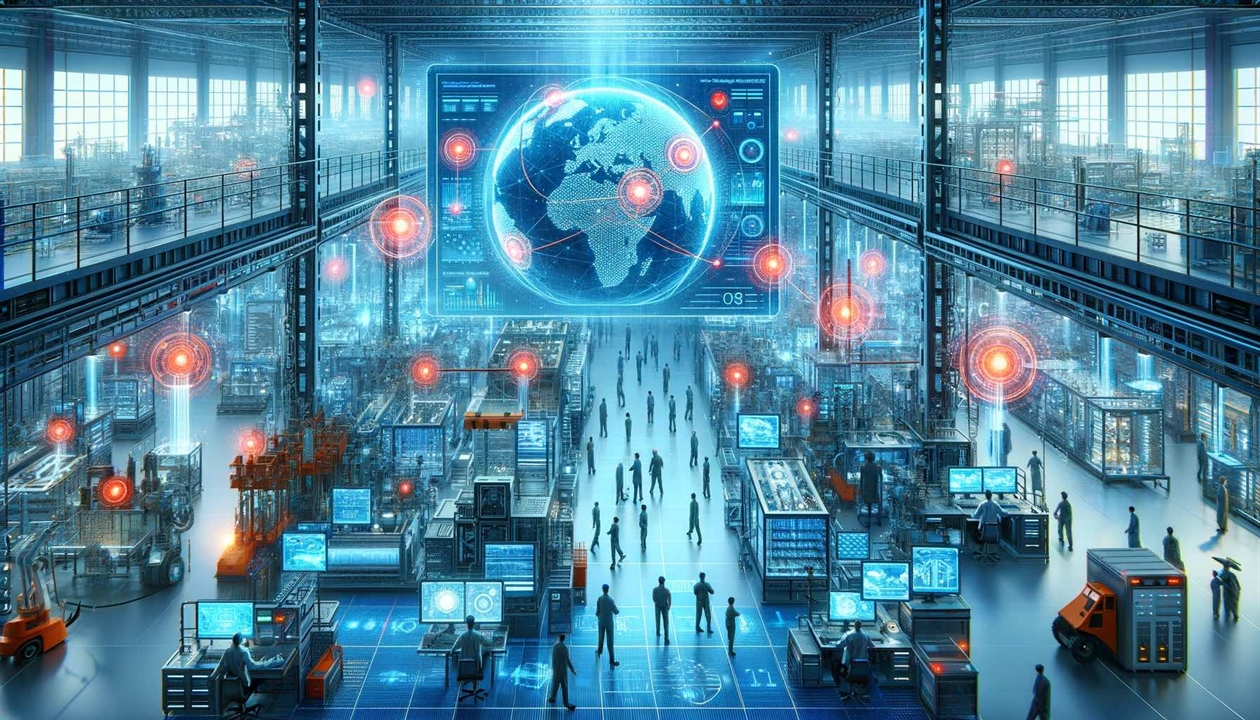
The data is undeniable: American manufacturing is coming home. According to the Reshoring Initiative Annual Report published in 2025, companies announced over 244,000 jobs via reshoring and foreign direct investment in 2024 alone, continuing a historic trend to shorten fragile supply chains.
However, as engineers and plant managers race to stand up new facilities and expand domestic capacity, they are colliding with a stubborn reality: the labor market is tight, and the workforce is changing rapidly. The Deloitte & The Manufacturing Institute 2024 Talent Study warns that the U.S. could face a need for 3.8 million new manufacturing employees by 2033—and without significant changes, 1.9 million of those jobs could go unfilled.
To bridge this gap, companies are tapping into a broader, more diverse labor pool. New data from the Bureau of Labor Statistics reveals that foreign-born workers now make up 19.2% of the U.S. labor force. Crucially, this concentration is significantly higher in the industrial sector, with foreign-born workers accounting for over 20% of production and material moving occupations and nearly 30% of construction and extraction roles.
This demographic shift creates a distinct systems engineering challenge on the shop floor. The industry is building the “Factory of the Future” with the most advanced robotics and IIoT sensors available, yet running them with a linguistic fragmentation that legacy communication tools simply cannot solve.
When a frantic safety alert in Spanish is met with a confused stare from an English-speaking supervisor, it becomes dangerous. And when a process improvement idea in Vietnamese never makes it to the plant manager, operational intelligence is lost. For U.S. manufacturing to truly scale, language barriers must no longer be treated as an HR issue, but as an operational constraint requiring a technological solution.
The hidden tax of the language gap
For the practicing engineer, efficiency is a formula. But variable human communication is often the error term in that equation. This operational drag is often invisible until it triggers a catastrophe, creating what is called the “hidden tax” of the modern diverse factory.
It compounds the already staggering cost of inefficiency. A 2024 report by Siemens found that unplanned downtime now costs Fortune Global 500 companies approximately 11% of their annual turnover, totaling nearly $1.5 trillion. In a linguistically fragmented workforce, this “downtime” isn’t always mechanical. Often, it is conversational.
Research from Relay indicates this tax is far higher than most executives realize, discovering that hidden labor costs due to language barriers likely cost the average industrial business $500,000 or more annually. This stems heavily from bilingual employees serving as unofficial translators, spending an average of 4 hours per week translating for colleagues instead of performing their primary roles. This alone costs businesses an average of $7,500 annually per bilingual worker in lost productivity.
The tax manifests in three critical areas:
Safety Latency
In an emergency, seconds matter. OSHA estimates that language barriers contribute to 25% of workplace incidents. This aligns with Relay’s findings, where 64% of respondents believe language barriers negatively impact employee safety at their facility. If a warning has to be mentally translated before it’s shouted, the accident has likely already happened. On a noisy floor, where auditory cues are already compromised, adding a linguistic filter can be fatal.
The Stalled Digital Thread
The industry has invested millions in digital transformation, yet the “last mile” of that data is often human. You cannot fully digitize a workflow if the worker cannot read the screen or understand the voice command. In fact, 86% of manufacturing and warehousing professionals believe their workplace loses productivity due to language barriers, with 42% estimating those losses exceed 5% of total output.
The “Knowledge Trap”
Experienced workers who speak English as a second language often hold deep tribal knowledge about machine quirks and material handling. Without a seamless way to share that, the knowledge remains trapped. It retires when they do, or worse, it creates an artificial ceiling for talent. Relay’s data shows that 48% of respondents agree language barriers reduce promotion opportunities for affected workers, fueling dissatisfaction and turnover.
The universal translator is no longer science fiction
For decades, the standard “solution” was a bilingual shift lead or a game of telephone. Today, Artificial Intelligence has altered the physics of this problem.
As highlighted in Deloitte’s 2025 Manufacturing Industry Outlook, 80% of manufacturing executives plan to invest significantly in smart manufacturing initiatives. The most impactful of these investments will be those that empower the human worker. The sector is moving past the era of static, one-way radios into the age of voice-first operational intelligence.
New advancements in Large Language Models (LLMs) allow for near-instantaneous translation of voice communications on the shop floor. This is distinct from consumer-grade translation apps, which often fail to grasp industrial context. Modern industrial AI is being trained to understand that “the line is down” refers to a production stoppage, not a geometric shape.
Imagine a scenario: A line operator speaks a maintenance request in Spanish into their device regarding a specific hydraulic failure. The floor supervisor hears it in English. The understanding is instant. Instead of searching for a translator, the supervisor dispatches a repair technician immediately, preventing a minor stall from becoming a major downtime event
This creates a truly interchangeable workforce. It allows a plant manager to balance shifts based on skill set rather than language compatibility. It removes the structural barrier for talented workers who may be technically proficient but linguistically isolated, allowing them to rise to leadership roles.
Signal-to-noise: filtering for danger
Furthermore, this technology can also address the “signal-to-noise” ratio that plagues busy engineers. On a standard radio channel, a supervisor hears everything—every request for a pallet, every break check. Eventually, ear fatigue sets in, and critical information is missed.
Modern two way radio platforms can now utilize AI for active cross-channel monitoring, listening for context rather than just rigid keywords. It allows a supervisor to filter out the chatter of a thousand daily radio transmissions and only be alerted when specific, high-risk topics (like “leak,” “break,” “injury,” or “lockout”) are mentioned.
This moves communication from a passive stream of noise to an active safety monitoring system. It empowers every worker on the floor with a direct line to safety protocols without the friction of complex workflows. Instead of hesitating to find the correct channel or recalling a specific alert code, a worker can simply state the issue naturally, trusting the AI to detect the urgency and notify the right team immediately.
Reliability—the prerequisite for inclusion
While AI translation is the software solution, software does not exist in a vacuum. It relies entirely on a hardware reality that is often ignored. You cannot have an inclusive, AI-enabled workforce if the device they are holding is a brick.
The current “Buy, Break, Replace” cycle of legacy hardware disproportionately affects the frontline. When batteries die mid-shift or devices shatter on concrete floors, the worker is silenced. For a non-native speaker, the psychological barrier to communication is already high. If their digital connection fails, they may be unlikely to walk across the factory floor to struggle through a face-to-face conversation in a second language. They may simply guess, or remain silent.
To support a diverse workforce, engineers must demand an “outcome-based” approach to hardware. The mindset needs to shift from buying radios to optimizing for uptime. If facilities guarantee machine uptime, why accept downtime for the human workers operating them?
A diverse workforce requires communication devices that prioritize continuity, ensuring that the tool will honor the work regardless of who is holding it. This means durability standards that match the environment, battery life that outlasts the longest shift, and connectivity that penetrates the deepest parts of the facility. Inclusion is impossible without reliability.
Engineering the human-centric future
The resurgence of American manufacturing will not be defined solely by how many chips companies can produce or how much steel can be poured. It will be defined by how quickly a new generation of workers can be integrated into a cohesive, safe, and efficient unit.
The diversity of the workforce is not a temporary condition; it is the new permanent state of the American industrial base. As the “Silver Tsunami” of retiring boomers recedes, the void is being filled by a dynamic, multicultural coalition of workers.
Reshoring is an invitation to innovate, not just in production methods, but in how the workforce connects. By leveraging AI-enabled, voice-first technologies, the industry can dismantle language barriers and cut through the operational noise. This turns a diverse workforce from a logistical challenge into a safer, more efficient, and fully synchronized asset.
The engineer’s job is to solve problems. The language gap is a big one. Fortunately, for the first time in history, we don’t need a specialized gadget to overcome it. We can now seamlessly embed intelligence directly into the tools the team is already using on the shop floor.