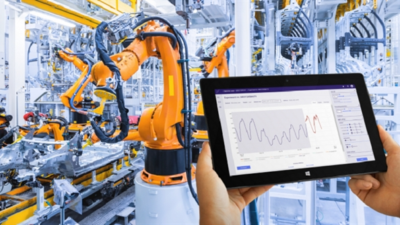
The $600 million sale of ThingWorx and Kepware to TPG signals a decisive refocus on lifecycle intelligence.
PTC’s divestiture of ThingWorx and Kepware to TPG is more than a portfolio adjustment—it is a 180° strategic shift from the platform-expansion vision under former CEO Jim Heppelmann. Where Heppelmann chased broad connectivity and IoT platform reach, the Barua era is defined by focus, operational precision, and lifecycle intelligence.
This is a defining inflection point for the PLM sector. The question PTC is now answering for customers and shareholders is no longer “How many devices can you connect?” It is now “How effectively do you convert connected signals into product lifecycle decisions?”
That reframing moves the competitive discussion from technical IoT plumbing to product insight. Under Neil Barua, PTC is deliberately simplifying its portfolio, scaling SaaS via the Atlas platform, embedding AI-driven intelligence across the lifecycle, and monetizing product data continuity. In short, it is moving from connectivity to intelligence—a shift that signals the next chapter in PLM leadership.
The reset we saw coming
PTC’s strategy has long been under scrutiny. Investors, partners, and competitors—including Autodesk—have been asking:
“Where is PTC headed? Is it a multi-SaaS platform company, an IoT player, or a PLM-first innovator?”
The company’s portfolio, spanning CAD, PDM, ALM, and IoT, made its priorities hard to discern. Market speculation peaked earlier this year when Autodesk explored a potential acquisition. Though discussions ended abruptly, the episode highlighted the industry’s central question: was PTC pursuing scale for its own sake, or focusing on clear differentiation in lifecycle intelligence?
The sale of ThingWorx and Kepware resolves that uncertainty. By divesting industrial connectivity, PTC signals a pivot away from platform breadth toward focused, product-centric value creation. This reset was predictable: the maturity of cloud connectivity stacks, combined with private equity interest in ThingWorx and Kepware, created ideal conditions for a separation. One company can scale connectivity independently, while PTC doubles down on lifecycle intelligence.
From connectivity to lifecycle intelligence
Industrial IoT was the first act of Industry 4.0 digital transformation: it proved that machines, sensors, and systems could communicate. That era, once groundbreaking, is now commoditized; connectivity is abundant. The differentiator today is how organizations translate connected data into actionable intelligence across the product lifecycle.
ThingWorx and Kepware gave PTC credibility in bridging IT and OT. But as open protocols and standardized cloud stacks proliferated, maintaining proprietary infrastructure became costly and offered diminishing differentiation. PTC’s pivot shifts the focus to orchestrating connected data into lifecycle insight, enabling smarter design, manufacturing, service, and sustainability decisions.
The Atlas platform exemplifies this shift. It underpins Windchill+, Creo+, and Codebeamer+, enabling scalable SaaS delivery, version control, and collaboration, while freeing PTC from maintaining a proprietary IoT stack. The company’s competitive edge is now measured by how product data drives decisions, reduces time to market, and improves outcomes, rather than how many devices it connects.
| Portfolio segment | Core products / acquisitions | Strategic focus |
| CAD & simulation | Creo, Creo+, Onshape | Product design and engineering collaboration |
| PLM & digital threads | Windchill, Windchill+, Arena (2021) | Lifecycle intelligence and cloud-native PLM adoption; Arena strengthens SaaS-native product lifecycle cohesion |
| ALM & requirements | Codebeamer, Codebeamer+ (2022), Integrity | Software-driven product development, requirements traceability, and cloud-native ALM collaboration |
| Service & field operations | ServiceMax (2023) | Lifecycle intelligence in service and asset management |
| Model & process validation | IncQuery Group (2025) | Automated model and process validation; integration with PLM for lifecycle intelligence |
| IoT & industrial connectivity (divested) | ThingWorx, Kepware | Industrial connectivity (now under TPG) |
Notes:
- The “+” products indicate cloud-first, SaaS-enabled delivery, aligned with Barua’s lifecycle intelligence focus.
- Divestiture of IoT assets (ThingWorx/Kepware) refocuses PTC on insights and intelligence, not device connectivity.
- PTC acts as a surgical consolidator, acquiring assets that reinforce lifecycle cohesion without diluting the platform.
The Barua blueprint
Neil Barua’s appointment as CEO in early 2024 marked a transition from broad ambition to operational precision. The Barua Blueprint crystallizes this strategy into four imperatives:
- Simplify the portfolio – Focus on PDM, CAD, PLM, and digital thread as the pillars of product innovation.
- Accelerate SaaS transformation – Scale predictable, cloud-first revenue through Windchill+, Creo+, and Codebeamer+.
- Embed intelligence and AI – Apply predictive design, simulation, and decision automation across the lifecycle.
- Monetize lifecycle depth – Expand ecosystem value through tighter integration rather than platform sprawl.
Investor clarity: By separating ThingWorx and Kepware, PTC also simplifies its investor narrative: performance is now measured on operational excellence and SaaS adoption, rather than on the speculative growth of a fragmented IoT market. This discipline mirrors the most successful industrial software transformations of the past five years: focus, clarity, and a clear ROI story for customers.
Industry implications, signals to watch
PTC’s pivot signals a broader maturation in industrial software. Connectivity is foundational but no longer sufficient; lifecycle orchestration—linking engineering, manufacturing, and service intelligence—defines digital maturity. Depth of integration now outweighs breadth of platform ownership.
For manufacturers, the benefits are tangible: faster SaaS delivery, simpler integration, and measurable ROI on PLM investments. For the ecosystem, TPG’s acquisition will accelerate industrial connectivity innovation, while PTC concentrates on intelligence-driven lifecycle solutions.
Over the next 12 months, the pivot will be judged by five signals:
- SaaS adoption – growth in Windchill+ and Creo+ subscriptions.
- PLM portfolio focus – continued divestitures or acquisitions aligned with lifecycle intelligence.
- Embedded AI – deployment of predictive and decision-making capabilities across the lifecycle.
- Strategic partnerships – leveraging hyperscalers, analytics, and automation platforms rather than building proprietary IoT stacks.
- Execution clarity – consistent investor and market messaging emphasizing lifecycle value.
PTC’s divestiture demonstrates that focus and execution now define industrial software leadership. By orchestrating insights rather than owning devices, PTC is charting a new chapter—moving from the promise of “connected everything” under Heppelmann to “lifecycle intelligence” value under Barua.