“The digital thread is broken,” Nicholas Cumins told Engineering.com at Bentley Systems’ Year in Infrastructure 2025.
Amsterdam is a city with a unique history and an unavoidable focus on infrastructure. You could say the same about Bentley Systems, the software developer that began as a family business and is now a major provider of infrastructure engineering applications.
Fitting, then, that Bentley chose Amsterdam as the site of its 2025 Year in Infrastructure event, an annual gathering of Bentley personnel, press, and prestige customers dedicated to infrastructure engineering.
Engineering.com was in Amsterdam last week to report on Bentley’s many software announcements. You can read the news and analysis in Bentley bets big on AI for infrastructure.
We also had the chance to sit down with Bentley CEO Nicholas Cumins, the first leader of the company who doesn’t share its name (in 2024 he succeeded longtime CEO Greg Bentley, the eldest of the five Bentley brothers and current executive chair of the board).
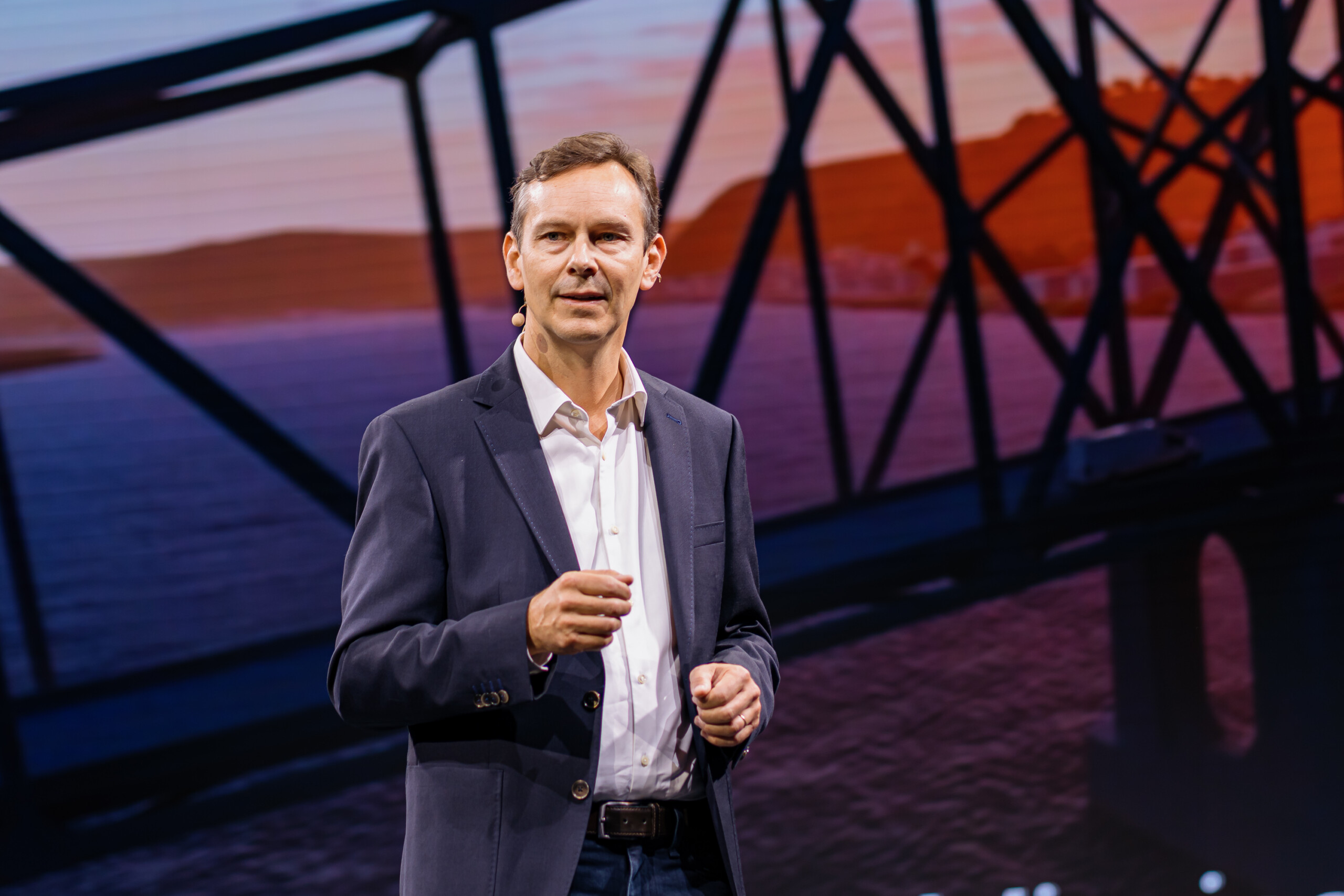
We spoke with Cumins about his vision for Bentley Systems, the challenges facing the infrastructure industry, how AI could be transformative for design and engineering, and the news he’s most excited about from YII 2025 (hint: it’s not any of the software announcements).
The following transcript has been edited for clarity and brevity.
Engineering.com: What is your vision for Bentley Systems?
Nicholas Cumins: Bentley is the infrastructure engineering software company. We offer software for pretty much all the engineering disciplines that are involved in designing and engineering infrastructure assets across industries, from transportation to electric utilities to the water network. We have the deepest, broadest portfolio of applications for infrastructure engineering, and we cover the full lifecycle from design to construction to operations.
Our greater vision here is how do you actually connect these phases of the lifecycle, from design to construction to operations and back to design? It’s very rare that you’re going to develop infrastructure in a vacuum. There are always existing assets. You want to keep all of that as context when you design potential new infrastructure or repurpose existing infrastructure.
So we want to make sure we can connect the loop from design to construction to operations back to design, so that we understand how designs have been performing over time to influence future designs going forward.
If that’s the vision, what’s the reality today?
The full feedback loop is still something that the industry is working towards. The truth of the industry is that the digital thread is broken.
When it goes from design to construction, it’s very often the case that if it’s a different firm in charge of construction, it’s actually going to recreate its own plans, its own models, to then move forward with the construction process. And it’s very often the case that the infrastructure assets, once they’re delivered, are being delivered with a lot of files, with a lot of data, with lots of simulation and analysis. But all of that data is going to go completely stale, and will reflect how the infrastructure asset was once it was delivered, but not how the infrastructure is at any point in time. And there is very rarely a feedback loop from the performance of the assets back to the original design.
So creating this digital thread is very much an endeavor for the entire industry. Organizations that do design-build will already make sure that there is a great digital thread that goes from planning all the way to the handover of the asset, so you will see pockets of that. But as an industry overall, I think it’s fair to say this is very much still ahead of us.
What do you see as the solution to that problem? Is it technological?
It’s technological potentially. I will say this is probably the easiest part, because we can do that already. It’s primarily the business models that need to evolve.
Engineering firms very often are charging time and material. They’re not charging based on the performance of the asset. So they don’t really have an incentive to be able to maintain that digital thread all the way to performance and back. So those are more fundamental things that need to be tackled.
Engineering firms have been talking about this for 100 years. There was one CEO who told me he found a whitepaper from the 1920s that was talking about moving to value based pricing for engineering services.
But interestingly, AI, because it’s changing the fundamental dynamics, it’s changing how value is being created. It might be the kick in the pants which is needed for the infrastructure sector overall to move to such business models.
How do you see AI impacting the infrastructure sector today?
We’re actually at the beginning of AI, and already we see amazing productivity gains. Some of the ones I quoted yesterday in the keynote were 60%, 80% productivity gains. So this is huge. It could be even more.
On the question of whether we replace engineers, we really don’t see that happening anytime soon in our space, because of what’s at stake here. There needs to be an organization that guarantees the designs that have been created, that can vouch for how reliable these designs are. And when they do that, they engage their liability. So we don’t see AI completely replacing engineers anytime soon.
What we do see is AI automating big parts of what the engineers are doing. And we see AI also making recommendations—not decisions, recommendations—to engineers. Things are moving so fast with AI, but a recent development we’ve seen is a clear acceleration of engineering firms who are using our applications to give feedback to the AI agents that they have created. So they will tap into our structural analysis software to see whether this is reliable from a structural standpoint. They will tap into our geotechnical software. They will tap into our hydraulics and hydrology software in order to get that kind of feedback.
We call that the engineering context. This is what AI needs in order to come up with appropriate recommendations. So we see our engineering applications providing engineering context to AI to make sure that AI is going to come up with appropriate recommendations.
How is Bentley planning to equip users with AI?
It’s a priority across our entire product organization. You will see AI in our core engineering applications. You will see AI coming up in Connect, a new set of capabilities as part of Bentley Infrastructure Cloud. And this is all about information management, data management and collaboration. You see AI also being developed into our offering for subsurface analysis called Seequent. So you see AI throughout our portfolio.
And then there’s something we haven’t really discussed so far, which is not just design and construction, but operations and maintenance. We have an entire offering dedicated to creating analytics on existing assets, which is all powered by AI. So it’s using computer vision, for example, to understand the exact physical condition of an existing asset and its full context. It’s using AI to detect if there’s something like some vegetation growing, or some electric poles which could be a danger. Is there a crack? Is there spalling on a bridge? And leveraging our own engineering applications to understand what that means from an engineering standpoint. Is there going to be a fire hazard here, a structural integrity issue? Do we need to do some remediation work? So this offering is called Bentley Asset Analytics, and it’s all leveraging AI.
Could you tell us more about the Bentley Copilot?
Bentley Copilot is an AI assistant that we have created in the context of our very first AI powered application for site engineering. And now we’re deploying it across our portfolio of engineering applications, as well as Bentley Infrastructure Cloud, the capabilities we offer for data management and collaboration.
So it’s the same assistant, and there is an interesting abstraction layer underneath it where we can swap from one LLM to another. We’re not dependent on any particular LLM, and I think we’ve swapped it already a couple of times.
Can users pick the LLM that they want to use?
No, this is transparent to them. Users sometimes create their own AI assistants, and what we do is offer them the interface needed so that their AI assistant can interact with our applications directly, or can interact with Bentley Infrastructure Cloud directly. Whenever they do this, obviously they pick whatever LLM they want.
How are your customers using their own AI tools with Bentley software?
The big engineering firms are creating AI assistants to help their engineers get information fast. And they could use that instead of our own copilot. We welcome that, even for simple things like our own documentation.
If you go on docs.bentley.com, you can interact with a chatbot. The same chatbot actually offers an MCP interface, the model context protocol, which is becoming a bit of a de facto standard for interfaces for AI. It was created by Anthropic and everybody is adopting it. We did this because we have a lot of engineering firms who wanted their assistants to be able to tap into the documentation. That’s a simple example.
Besides creating those MCP interfaces, there are two ways we’re fundamentally helping these engineering firms. One is helping them tap into their past project data that they’ve put into Bentley Infrastructure Cloud. In whatever file format that data is, whether it’s Bentley or not, we help them map that data into schemas. It’s called the base infrastructure schema. Suddenly that data is query-able, it’s searchable, and it’s ready to be picked up by AI. Basically, we give them technology that they can then use in order to access data, which can be decades old.
And the other way we’re helping them, which I think is the most profound, is our own engineering applications providing feedback to their AI. They’ve been trusting these applications for decades, they’re very established. STAAD, our application for structural analysis, is the gold standard application for structural engineering. PLS [Power Line Systems] is the same for transmission towers, and so on and so forth. So we have this deep and broad portfolio of engineering applications, and the big engineering firms now want not just infrastructure professionals to interact with those applications, they want AI also to interact with those applications.
So yesterday we announced that we have a co-innovation initiative to discuss very openly with those firms what APIs we have right now and how we need to evolve those APIs to help solve their use cases. And to what extent we also need to continue to evolve the architecture of our applications so that they can be queried by AI as cloud services as opposed to desktop software. Because right now, those are primarily desktop applications.
And also, how do we need to evolve our own commercial models to make sure that, with all the value that will be created, all these productivity gains that are going to be generated for the engineering firms leveraging AI, we can capture our fair share of the value. Because everything, whether it’s our architecture, our commercial models, everything right now is designed for individual infrastructure professionals to use our applications. And now we’re talking about something completely different.
Will Bentley Copilot be available across the Bentley portfolio?
Yes, you see it in all the next generation applications. So OpenSite+, Substation+ and Synchro+. The plus indicates it’s a new generation. There is a previous generation that still exists, but at some point, once it’s fully replaced, we’ll just drop the plus.
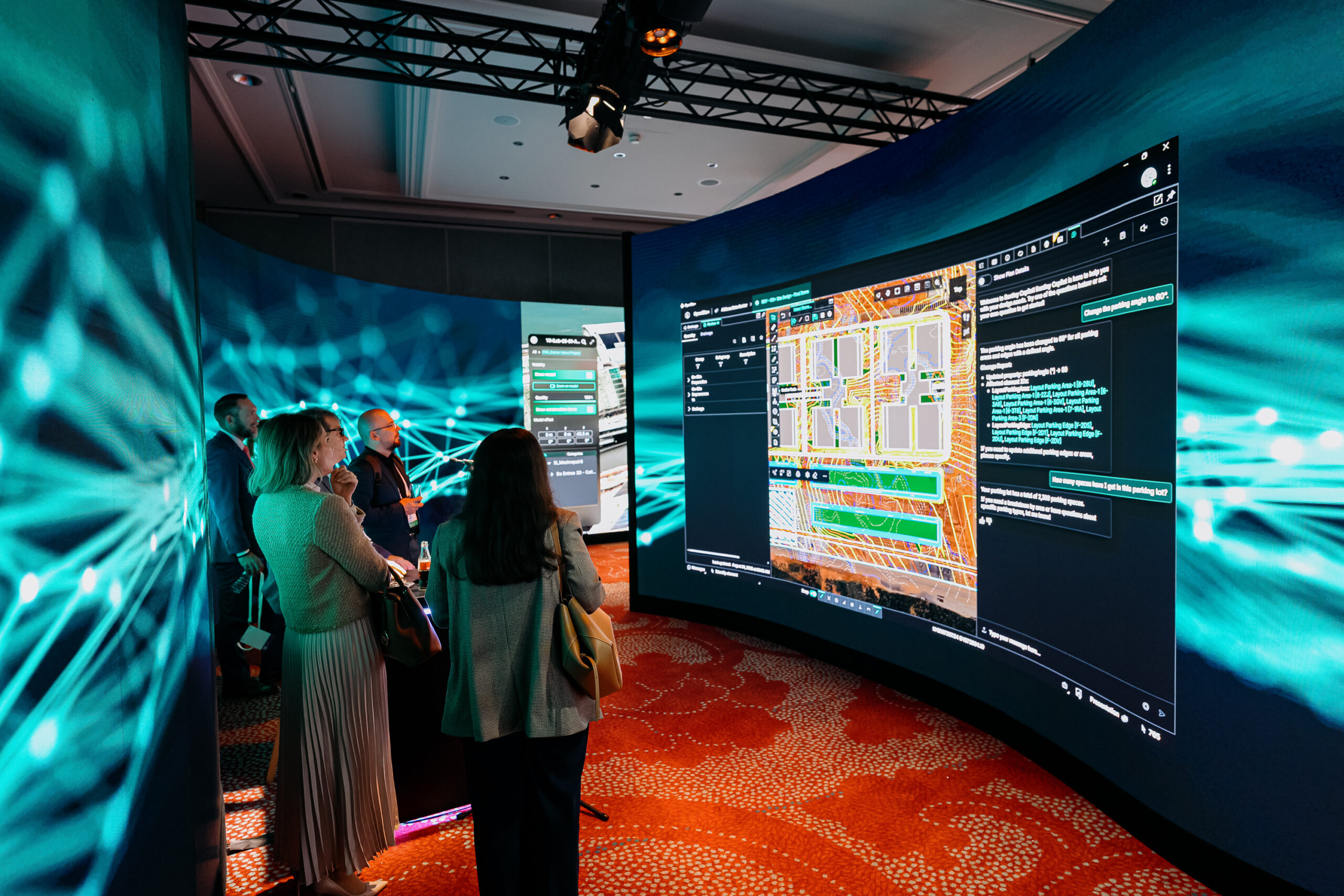
But then we also showed how we’re bringing the same copilot capabilities within established applications such as OpenRoads or OpenRail. We’ve shown how we’re embedding it into Bentley Infrastructure Cloud for the search capabilities, for example. Say you’re in ProjectWise as part of Bentley Infrastructure Cloud, for example, and you want to search past project data. You will actually interact with the Bentley Copilot.
What makes the next generation applications next gen? Is it just the addition of AI?
They are powered by AI, but their fundamental architecture is also quite different, because they all organize around a digital twin. And by that, what we mean is the data that is being created, instead of being created into an engineering file, whatever file format you pick, the data is being created into a digital twin. It’s persisted as a digital twin, which is cloud based, so it’s in the cloud.
And that allows multiple engineers to work together at the same time on the same project. So take Substation, for example. You will see engineers representing different disciplines who can work concurrently on the design of a new substation.
Do you have a timeline on transitioning the rest of the portfolio to the next generation?
No, we pace it because we don’t want to create too much disruption. For civil engineering we started with site engineering, because that’s typically how a project starts. Design the site first, and then you can go and design the data center, for example.
And then we went after substation, because we thought this is where there is the most acute need for concurrent engineering. There’s such big demand for electricity. The electric grid has to be upgraded. There’s a need for way more substations than we have right now, and there’s a lot of work to be done. Substation engineers cannot afford to be just waiting. So that’s why we went after that.
Probably the last applications that are going to be re-platformed are those very established applications such as OpenRoads and OpenRail. That’s why, instead of waiting, we decided to bring some AI capabilities into those, even though they’re still fundamentally file based applications.
You said a few times at this event that you won’t use your customers’ data to train AI. Why do you feel it’s important to emphasize that point?
It’s a matter of principle. It’s wrong to use the IP of one engineering firm to train AI that will benefit other engineering firms. It’s just wrong.
The same way that we are making really sure that when we use AI internally to help our developers, that our code doesn’t start to train AI that can benefit other software vendors. So it’s really a matter of principle.
I can tell you, however, that it is top of mind for engineering firms themselves. They are very concerned about their IP, their data, being used to train AI of other software vendors. And sometimes there’s also unclarity on who owns the IP. Sometimes it’s them, sometimes it’s their clients. So sometimes they’re not even allowed for that data to be used to train AI even if they wanted it to.
So we made it very clear that we will not use the data of our users, whether they are engineering firms or owner-operators, to train our own AI, unless they explicitly permit us to do so.
Which announcement are you most excited about from this year’s YII?
In a funny way, it might not be any of the software announcements. It would be this AI co-innovation initiative. I’m just in awe when I look at what engineering services firms, owner-operators are doing right now with AI and the possibilities that it opens up. I am just in awe. So I’m very much looking forward to those conversations about how we can help even more by evolving, especially our engineering applications.