We’ve seen them in previews, betas, and initial releases, but in 2026 these AI features will be in every major CAD program.
Happy New Year! This is Engineering Paper, a weekly news column bringing you the latest in design and simulation software.
There’s not a lot of software news coming out of the holiday lull, so today I want to discuss something you just don’t hear much of these days: AI.
Specifically, AI in CAD. Over the last year or two, we’ve seen every major CAD program experiment with AI features. Some were only proofs of concept, some were testable betas, and a few even made it into release.
I think it’s safe to say we can expect more AI feature releases this year. Here are three that I think are likely to come to every major CAD program in 2026.
AI feature 1: Product support chatbots
This is an easy one to predict. Many CAD programs have already launched AI chatbots that are trained on the manual to help out new (or forgetful) users. Why RTFM when ChatGPT can do it for you?
Current examples of product support chatbots include Onshape’s AI Advisor, Siemens’ Design Copilot for Solid Edge and NX, Autodesk Assistant for Fusion, AutoCAD, Revit and more, Dassault’s Systèmes’ Aura, a so-called virtual companion for the 3DExperience platform, and SketchUp’s AI Assistant, to name but a few.
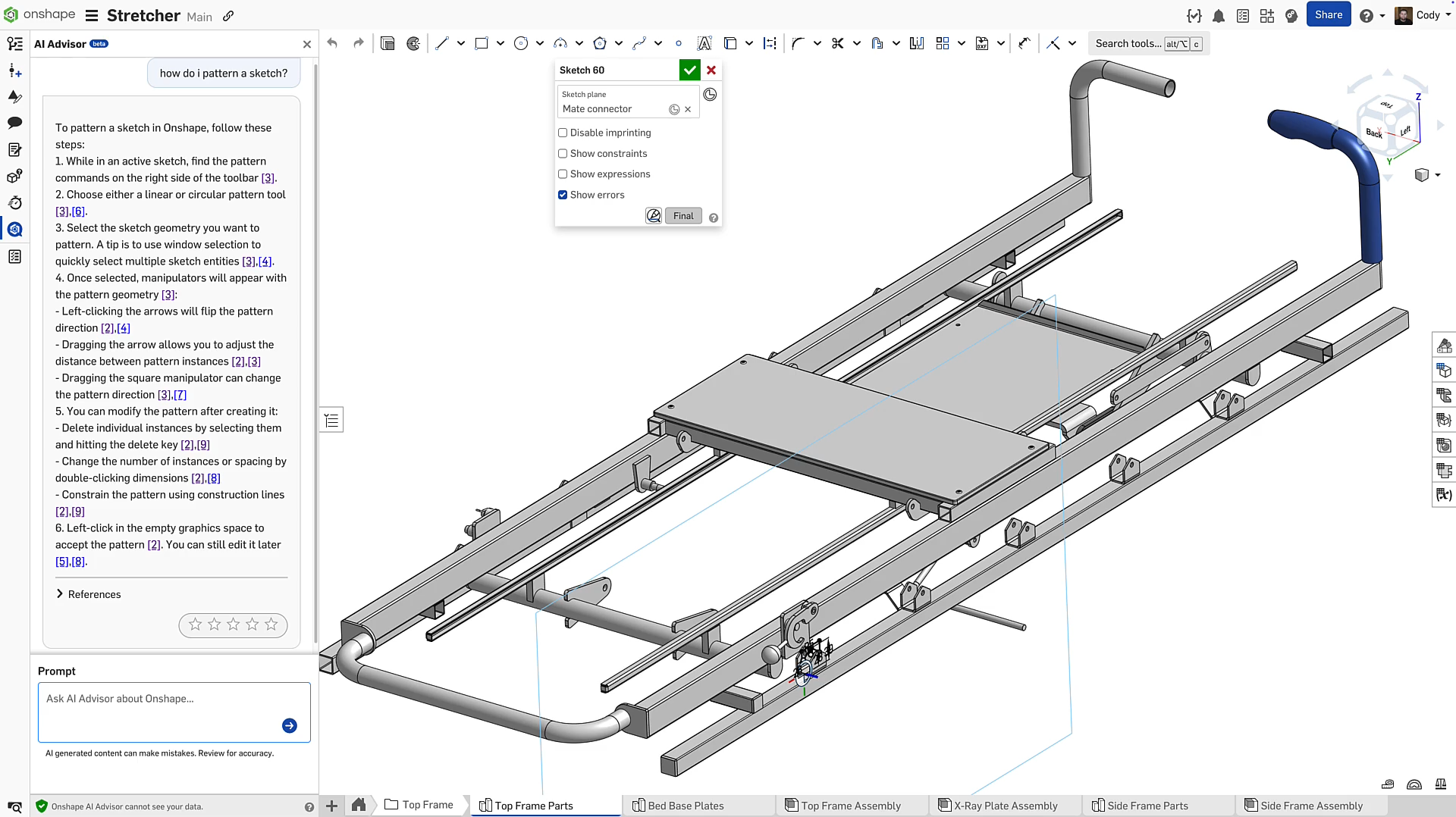
Why so many product support chatbots? Because it’s a relatively easy AI feature to implement and it works relatively well. CAD developers don’t need to build chatbots from scratch—they can just tweak popular LLMs like ChatGPT or Claude to reference their support docs. Since they’re right there in your workspace, chatbots are a quick way to figure out a feature or find a command without going to the trouble of Googling it.
AI feature 2: Automated drawings
Creating 2D drawings of a 3D model is often a chore. That, and the repetitive nature of the task, makes it an ideal candidate for AI.
We’ve seen AI-based drawings in a few CAD programs already, and I expect to see more this year. Autodesk Fusion has a feature called Automated Drawings that combines templates and heuristics with AI to create a set of drawings for an assembly. It currently uses an AI model to classify standard fasteners and exclude them from drawings. Autodesk says it will continue to add AI features, such as a model to place dimensions more naturally.
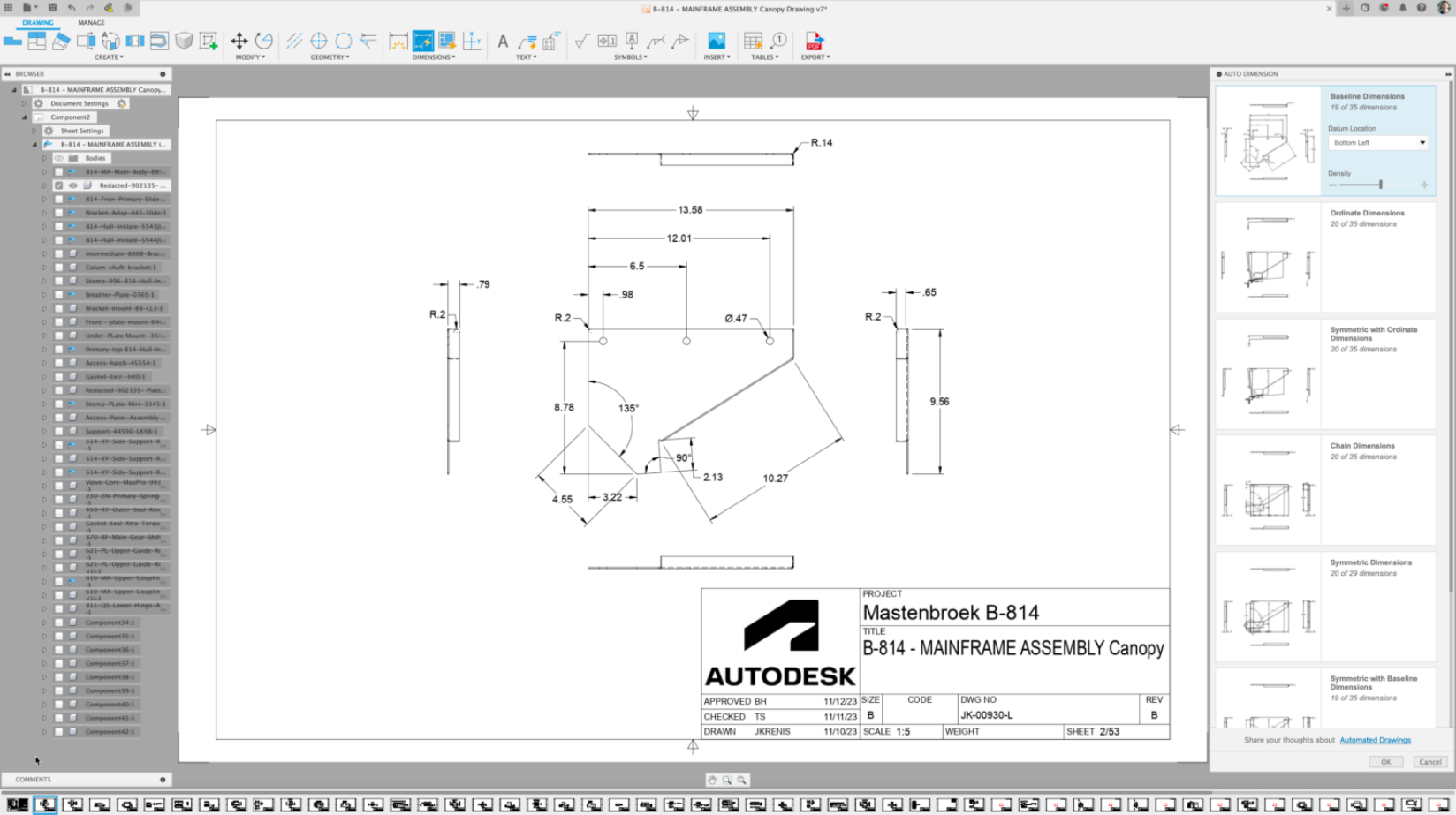
Another example is the latest version of Siemens Solid Edge (make that Designcenter Solid Edge), which added an AI feature that generates up to 80% of drawing views with minimal user input, according to Siemens. Dassault Systèmes has said that automated drawings is coming to Solidworks (it’s in beta for 3DExperience users). I’ve also heard recently from Onshape execs that it’s a work in progress over there.
AI feature 3: Generative rendering
Generative rendering is another AI feature we’ve seen before, but it hasn’t yet broken through to release in most CAD programs. I expect that will change this year.
Instead of the usual process of setting up a scene with lighting and materials, generative rendering uses AI to quickly create realistic renders of 3D models. In the usual AI fashion, you can use text prompts to experiment with endless variations.
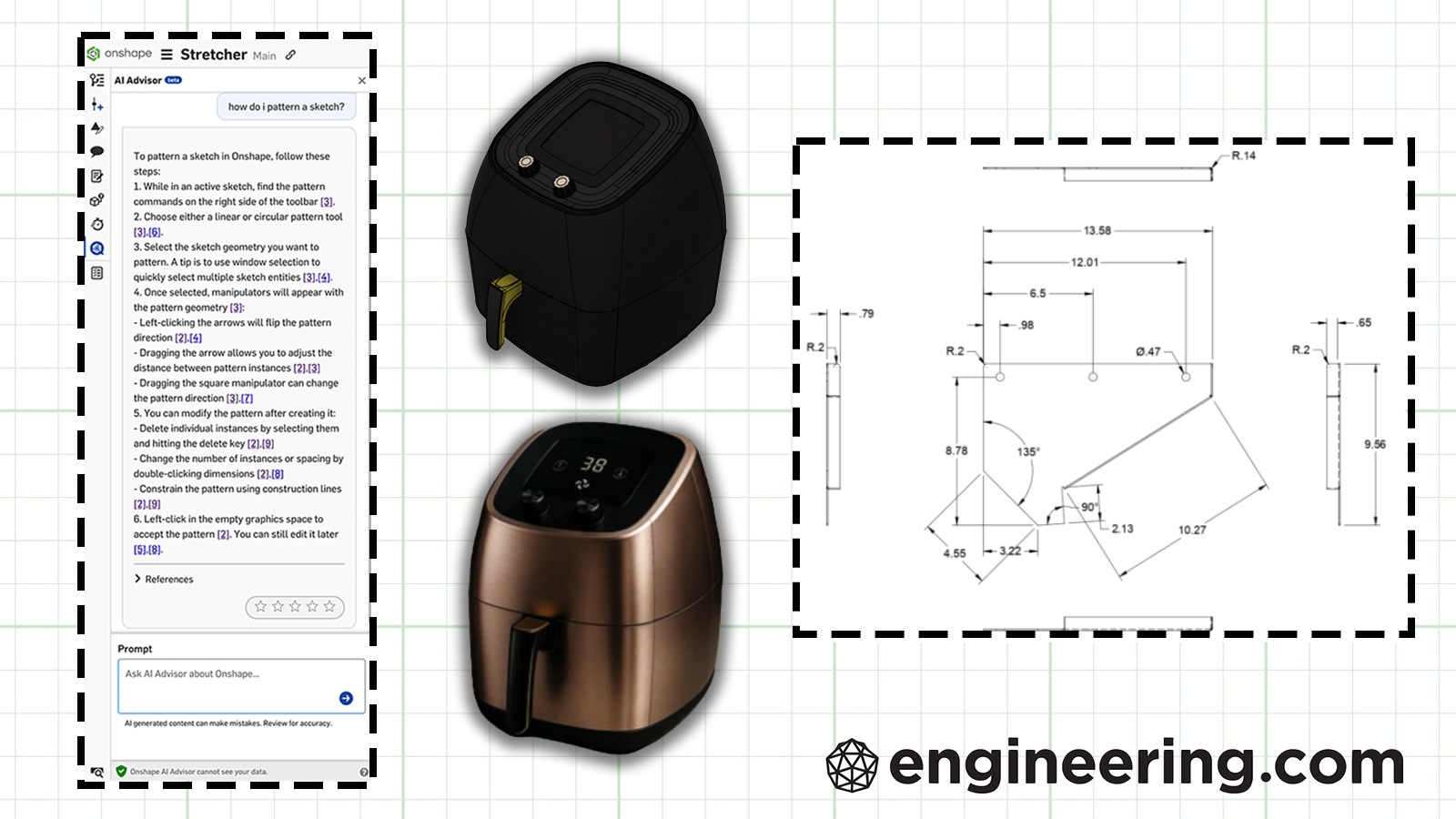
I believe SketchUp was the first CAD program to get generative rendering, with Trimble releasing SketchUp AI Render just last month. But many other CAD developers have previewed their own versions. At 3DExperience World last February, Dassault Systèmes said generative rendering was in the works for Solidworks. Autodesk showed it off in Fusion at Autodesk University in September (see the generatively rendered air fryer in the thumbnail above). As with automated drawings, I have it on good authority that generative rendering is coming soon to Onshape, too.
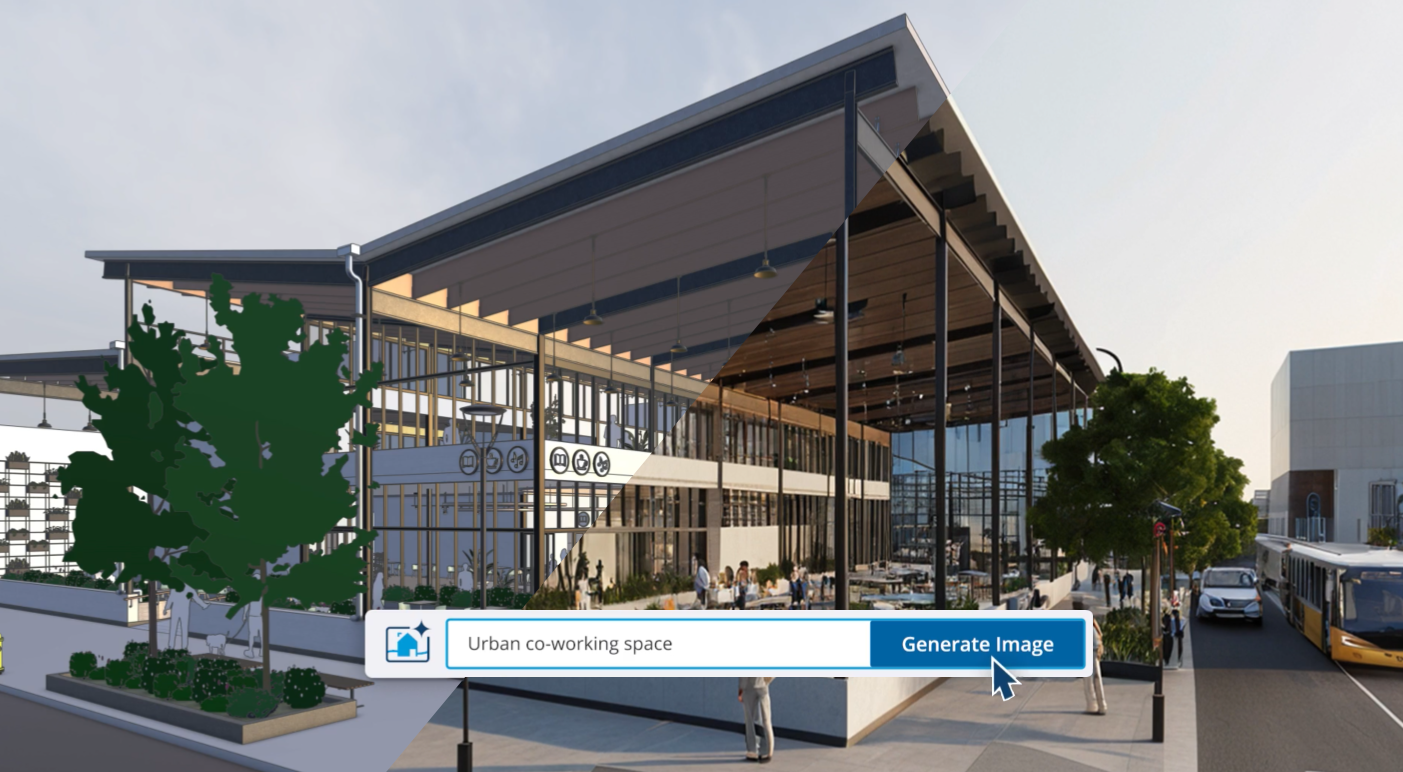
Generative rendering isn’t picture perfect—at least not yet—but it’s good enough for an iterative design process. There are standalone generative rendering applications, but if this is the future of rendering, it only makes sense for CAD programs to integrate it directly (many already have traditional rendering tools available).
Generative rendering, automated drawings, product support chatbots… it may not be the CAD revolution I predicted last year, but hey, it’s a start.
Quick hits
- CES 2026 is taking place this week in Las Vegas, Nevada. The tech tradeshow will have speakers from many engineering software companies, including Siemens, Autodesk, PTC, and Nvidia.
- It’s your last chance to nominate your company for Engineering.com’s 2026 Top Workplaces for Engineers award. The deadline is January 9, 2026. You can learn more about the award here.
- JetCAM has announced the latest version of its flagship CAM software, JetCAM Expert 25.12. The developer says the new release will improve productivity for sheet metal and composite fabrication.
One last link
I’ve been concerned about the effect of AI on professional development for a while. Apparently so has Engineering.com contributor Lionel Grealou, who wrote about the potential problem in AI will reshape engineering careers and experience, not jobs, is at risk.
And one more last link that took the words right out of my keyboard: Engineering.com senior editor Ian Wright shares some thoughts on AI in Design for additive manufacturing perspectives.
Got news, tips, comments, or complaints? Send them my way: [email protected].