Flux CEO Matthias Wagner wants users to be able to prompt their way to PCBs and beyond. But there’s a hidden cost (literally).
This is Engineering Paper, and here’s the latest design and simulation software news.
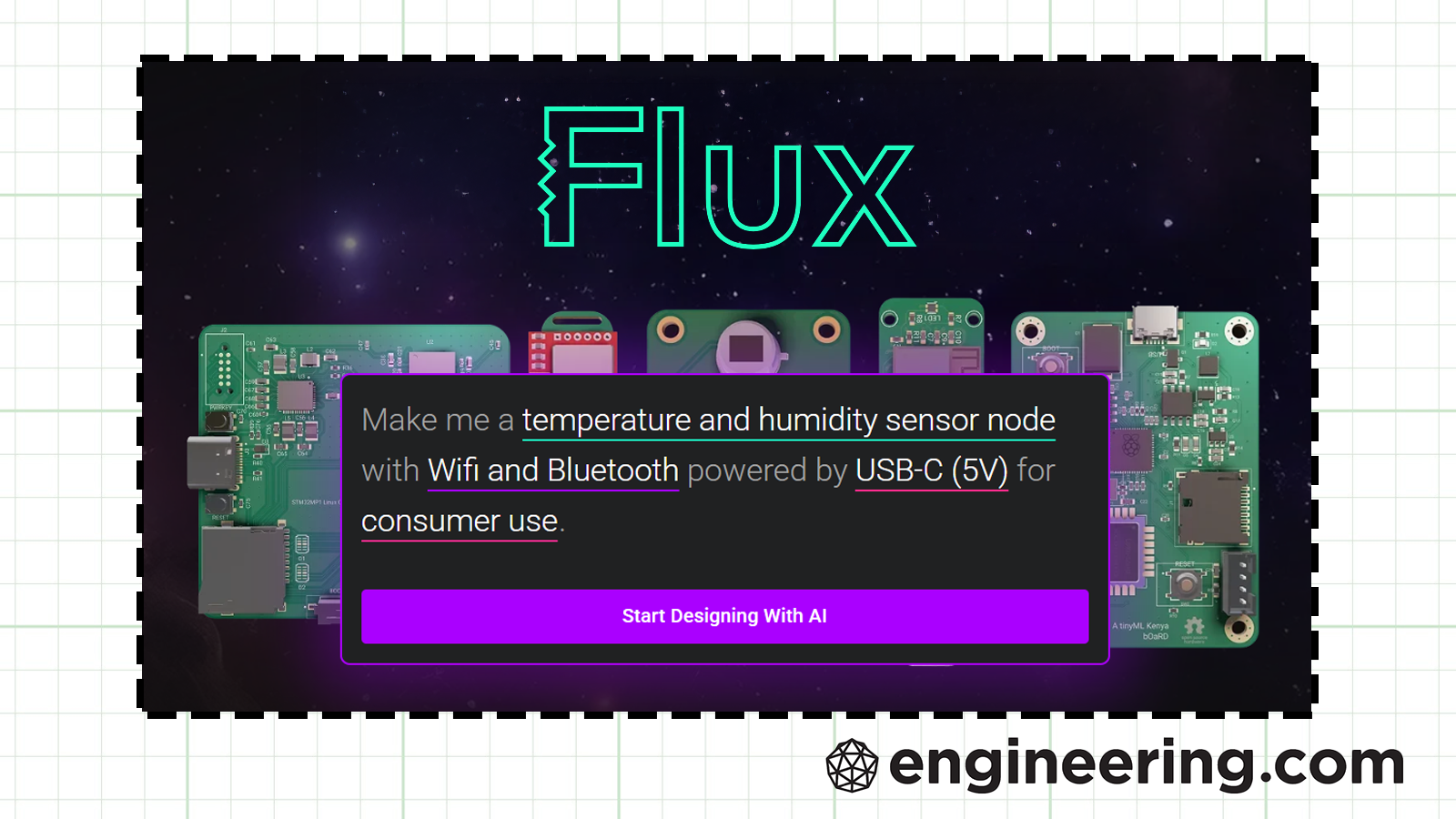
A few weeks ago I wrote about Flux, a browser-based ECAD tool, and its announcement of new AI capabilities to design circuit boards from text prompts.
I’ve since had the chance to speak with Flux CEO Matthias Wagner to learn more about the platform and its AI features. Like many founders of engineering software startups that I’ve spoken to recently, Wagner, a former Facebook product manager, was fed up with the stale state of design software—especially in comparison to tools for developing software.
“Hardware was somehow still stuck in what could have been the 90s,” he complained. And complained. And complained some more. Wagner grumbled about the problem so much that eventually a friend told him to “either do something about it or stop talking about it.”
He chose door number two, and in 2019 he founded Flux, a cloud-based tool for electronic design with modern features like real-time collaboration. But by 2025 Flux, like many design tools, has become enraptured by AI, and so has Wagner’s vision for the platform.
“You can go to ChatGPT and turn a prompt into a poem, into a recipe, into everything,” Wagner began. “We want to enable that for atoms. We want to enable people to go from a text prompt to a manufactured piece of hardware.”
How close is Flux to that vision today? I asked.
“It’s day one,” Wagner said. “Just two weeks ago we shipped what I call an AI hardware engineering intern that has incredible capabilities, but oftentimes requires some supervision by somebody who’s more experienced.”
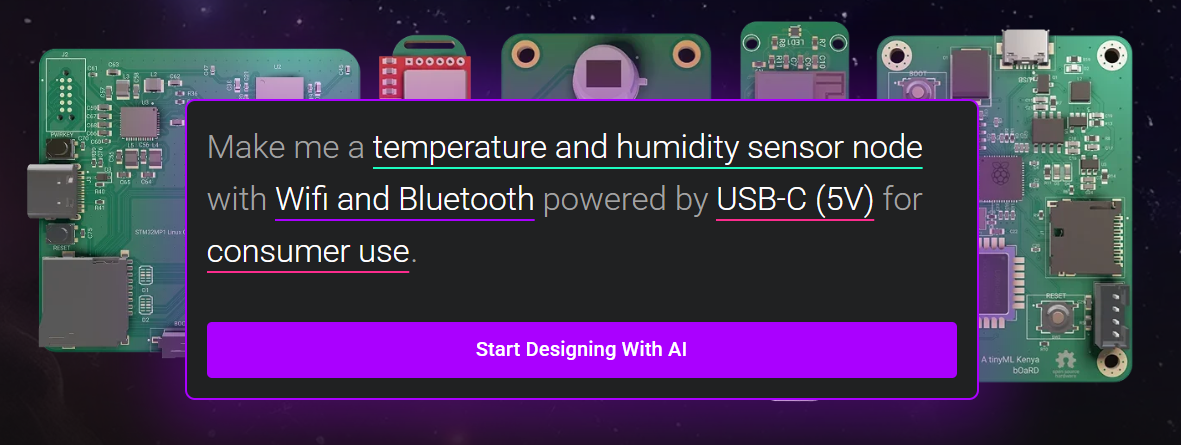
All Flux users can now access that AI intern in beta (“I feel like interns are professionals in beta,” Wagner quipped). The AI can help electrical engineers across their entire workflow, from planning a design to laying out a circuit schematic to optimizing and debugging boards, according to Wagner.
“When it works, it’s magical,” he said. “There’s a lot of use cases where, just from a single prompt, it will do the full thing. And then there’s a lot of use cases that will get you, 80% there, 90% there, 50% there. And then the user has to either provide input or drive it over the line manually.”
Flux’s AI is built on top of commercial LLMs (like those from OpenAI and Anthropic) with some smaller custom AI models built in-house (like one for optical character recognition, OCR, to read charts and tables). The custom models are trained on a mix of publicly available designs, synthetic datasets, and in-house data, according to Flux. Wagner noted that “we don’t train models on user data.”
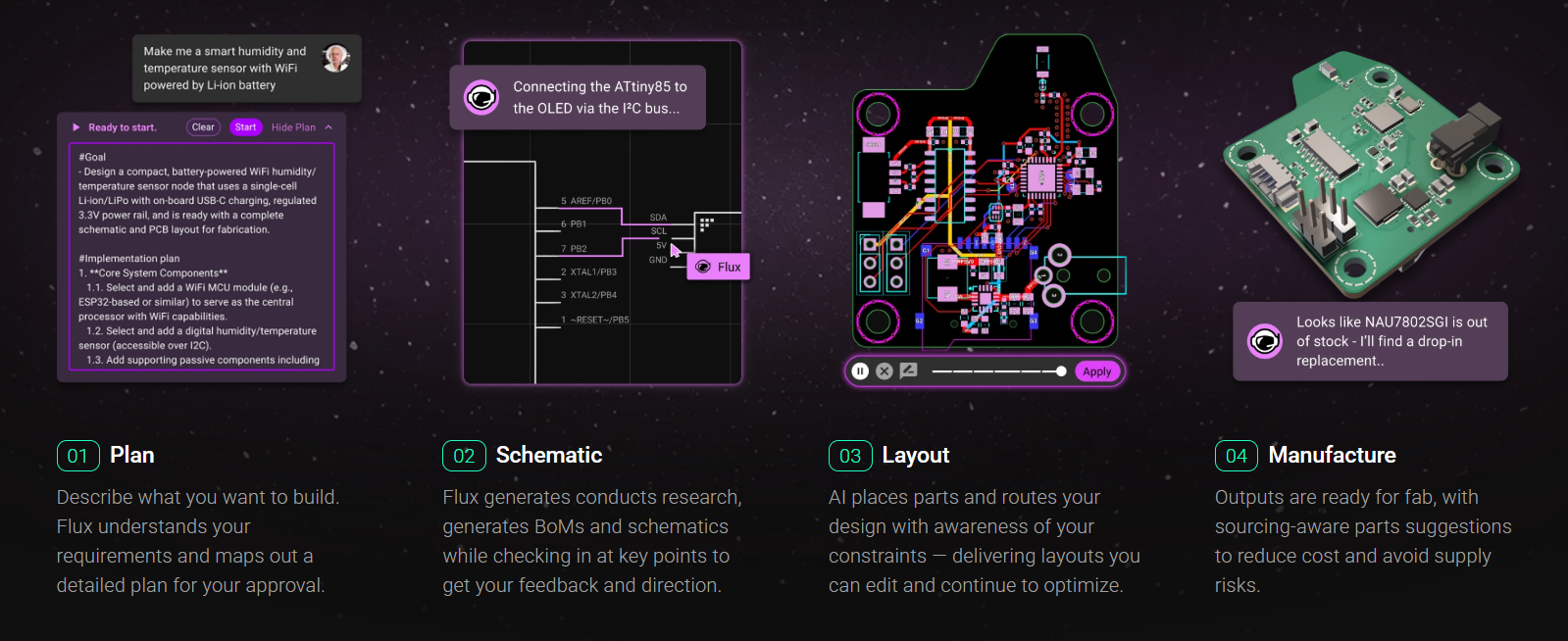
Flux is subscription software, licensed in four tiers: Starter ($15/month), Pro ($39/month), Teams ($49/month) and Enterprise (custom pricing). Each tier comes with some amount of AI credits (from 100 to 500 per month) which are spent every time a user accesses the AI. The cost of any prompt is only determined after the computation, Wagner told me, adding that there’s high variance.
Why? “It’s like trying to estimate the time it takes to complete a project that you have never done before,” Wagner said. “You’ll figure it out as you do it.”
I asked if he could estimate a rough cost of using Flux’s AI, and Wagner said that the company’s example prompts (such as those pictured above) would cost about $6 to $7 apiece. Since 100 credits cost $4 or $5 (depending on your tier), that’s roughly 120 – 175 credits per prompt.
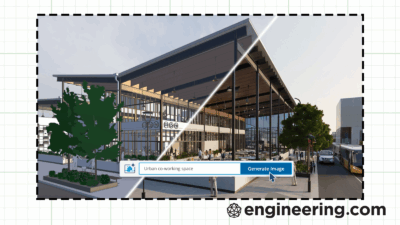
If the Flux AI works as well as you’d hope, and could truly save hours of engineering effort, then the costs would be easy to justify. But what about when it doesn’t work? If you’ve used AI, and by now you have, you know that it often takes a few prompts to get where you want to go. Sometimes many more. If you had a mystery bill due on every prompt, you might be reluctant to experiment. Flux isn’t the only developer charging credits for AI calls (Depix does it for AI rendering, for example), but it’s the first I’ve seen that doesn’t have a standard price per prompt.
Regardless, what matters is whether or not electrical engineers find value in Flux AI. Wagner says users are “generally ecstatic” about the new capabilities, but I have yet to see much real user feedback. If you have some, I’d love to hear it in the comments or at [email protected].
Check out the 2025 LEAP Awards winners
Design World has announced the winners of the 2025 Leadership in Engineering Achievement Program (LEAP) Awards. Judged by an independent panel of industry experts, the awards celebrate innovative engineering across 11 categories.

The 2025 LEAP categories were:
- Advanced materials
- Computer hardware and software
- Connectivity
- Embedded computing
- Fluid power
- Industrial automation
- Mechanical
- Motion control
- Power electronics
- Switches and sensors
- Test and measurement
Congratulations to all those who leapt to the podium. You can watch a replay of the winners announcement or see a list of the winners here.
Quick hits
- NCG CAM Solutions has released NCG CAM v20.0. The developer calls it a major release that provides huge improvements to finishing operations, new features such as the ability to machine with shaped cutters in 3-axis, a new C/C#/C++ API, and much more.
- Keysight has launched a new EDA application called Quantum System Analysis that it says will reduce reliance on costly cryogenic testing. Part of Keysight’s Quantum EDA portfolio, Quantum System Analysis provides a time dynamics simulator and the ability to model cryostat input lines to qubits.
- Lumafield has announced Auto-Dimensioning, a new feature for automated geometric dimensioning and tolerancing (GD&T) in its CT scanning technology. “Auto-Dimensioning turns CT scanning into a true metrology tool, making it accessible to every engineer. By automatically identifying and measuring features inside and out, we’re giving teams reliable, traceable data they can use to move faster, catch problems earlier, and build better products,” said Andreas Bastian, co-founder and head of product at Lumafield, in the company’s press release. Currently in private beta, Auto-Dimensioning will be available in Lumafield’s Voyager software in early 2026.
One last link
My former colleague Shawn Wasserman led this fun Altair blog post that uses simulation to prove that Back to the Future, the classic time travel flick in which a teenager and mad scientist drive into the past, isn’t quite as realistic as you may have thought: Digital Debunking: Doc Brown’s Survival in Back to the Future.
Got news, tips, comments, or complaints? Send them my way: [email protected].