Siemens has sponsored this post.
Designing modern aircraft requires extreme precision. Even a small design oversight can have severe consequences, from safety risks to costs in hundreds of millions. Long development cycles stretching years and involving thousands of interdependent components mean that minor changes can cascade across structural, aerodynamic and avionics systems.
Traditional digital design workflows often compound these challenges. Different engineering teams typically work in parallel on separate 3D CAD models, creating gaps in communication and interpretation. Without a unified spatial understanding of the aircraft, assumptions about interfaces or material properties can go unverified until late-stage reviews or physical prototype builds. At that stage, identifying and resolving issues becomes expensive and time-consuming, especially when iterations involve new tooling, complex composite structures or tightly integrated subsystems.
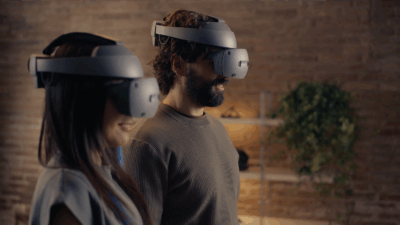
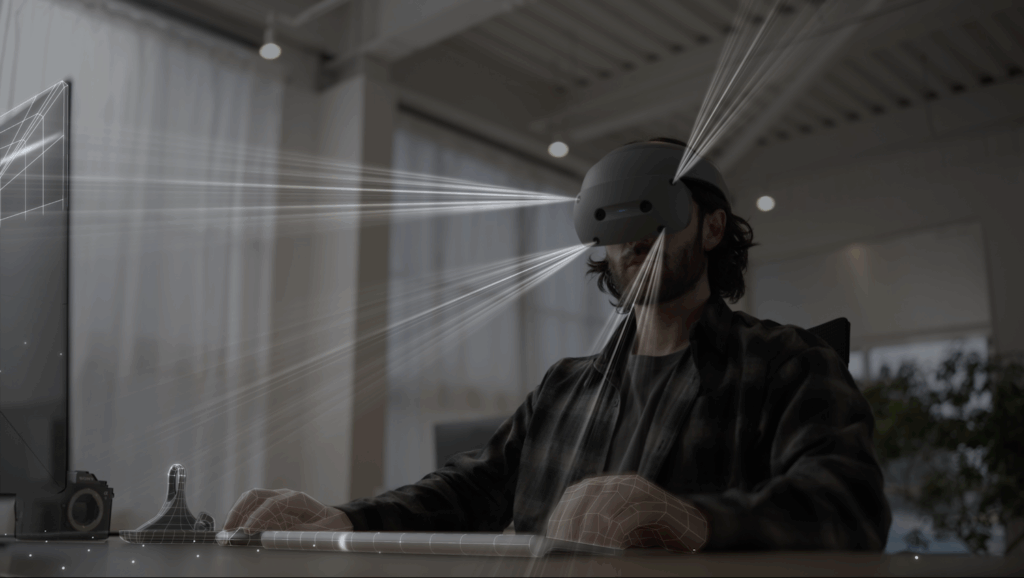
Siemens’ NX Immersive Designer, combined with the Sony XR head-mounted display, directly addresses these challenges by placing designers and stakeholders inside a unified, full-scale virtual environment. Instead of interpreting geometry on a 2D monitor, teams can walk through the aircraft, evaluate integration decisions in real-time and validate ergonomics and routing with far greater confidence.
One of the most immediate benefits is restoring a true sense of scale. Aerospace spans from large airframes to compact avionics bays and understanding spatial relationships is critical. Traditional 3D CAD simply cannot convey the physicality of an 85-ft wingspan or the constraints inside a cockpit. Immersive Engineering brings that intuition back.
Immersive Engineering for a blended wing body aircraft
A compelling real-world example comes from Natilus, a California-based startup developing next-generation remotely piloted cargo aircraft. Its blended wing body (BWB) design aims to deliver 50 percent more internal volume and 50-60 percent lower fuel consumption than conventional designs.
Using Siemens NX Immersive Designer with Sony’s XR headset, the engineering team could visualize the digital twin of their 85-foot-wingspan aircraft directly in their hangar. Wearing the XR headset, engineers walked around and inside the virtual airframe to examine components as if the prototype physically existed.
For example, designers reached into the cargo hold to place or rearrange components and evaluate fit. This hands-on, spatially aware workflow makes it far easier to spot interference issues or ergonomic constraints that are often overlooked in 2D drawings or traditional CAD reviews.
Perhaps the transformative benefit was the reduction in design cycle time. Issues identified during an immersive review can be addressed immediately because Siemens Immersive Designer is an integrated extension within the Designcenter NX CAD software. Any changes made during the immersive session are reflected in the master 3D model in real time. This instant feedback loop shortens iteration cycles significantly compared to traditional methods.
Immersive Engineering has also proved valuable for communication and collaboration with non-engineering stakeholders. Natilus could bring a laptop and the Sony XR headset to investor meetings or customer sites and effectively “bring the aircraft with them.” Demonstrating the aircraft’s interior space, loading mechanics and container configuration at true scale accelerated understanding and alignment.
“Natilus is one of the early adopters of this technology. With immersive tools, Natilus can virtually configure each customer’s containers inside the aircraft, walk stakeholders through the layout and even show animations of how cargo is loaded and unloaded,” says Ben Widdowson, Head of Marketing Immersive Engineering at Siemens.
Even before completing their prototype, Natilus secured more than $6 billion in initial orders for over 400 aircraft from major airlines and integrators. The immersive demonstration played a key role in building confidence. For instance, customers could validate that their standard shipping containers fit within the angled BWB cargo hold and test variations of loading sequences digitally.
This type of interactive, customer-centric validation was nearly impossible without a physical prototype in the past. Immersive Engineering now allows aerospace companies to optimize design decisions collaboratively well before manufacturing begins.
Conclusion
Immersive Engineering is emerging as a necessary evolution in aerospace development. As demonstrated by Natilus, real-time, full-scale interaction with digital aircraft twins enables accurate component placement, ergonomic evaluations, and system validations. By integrating engineering workflows with intuitive spatial understanding, immersive tools aim to reduce design risks, accelerate decision-making, and create new pathways for stakeholder engagement.
“When designers can experiment with configurations and evaluate digital twins upfront, it lowers program costs by minimizing early physical prototyping and ultimately opens the door to greater innovation in complex defense and aerospace programs,” Widdowson concludes.
Visit Siemens to learn more about Immersive Engineering with NX CAD.